


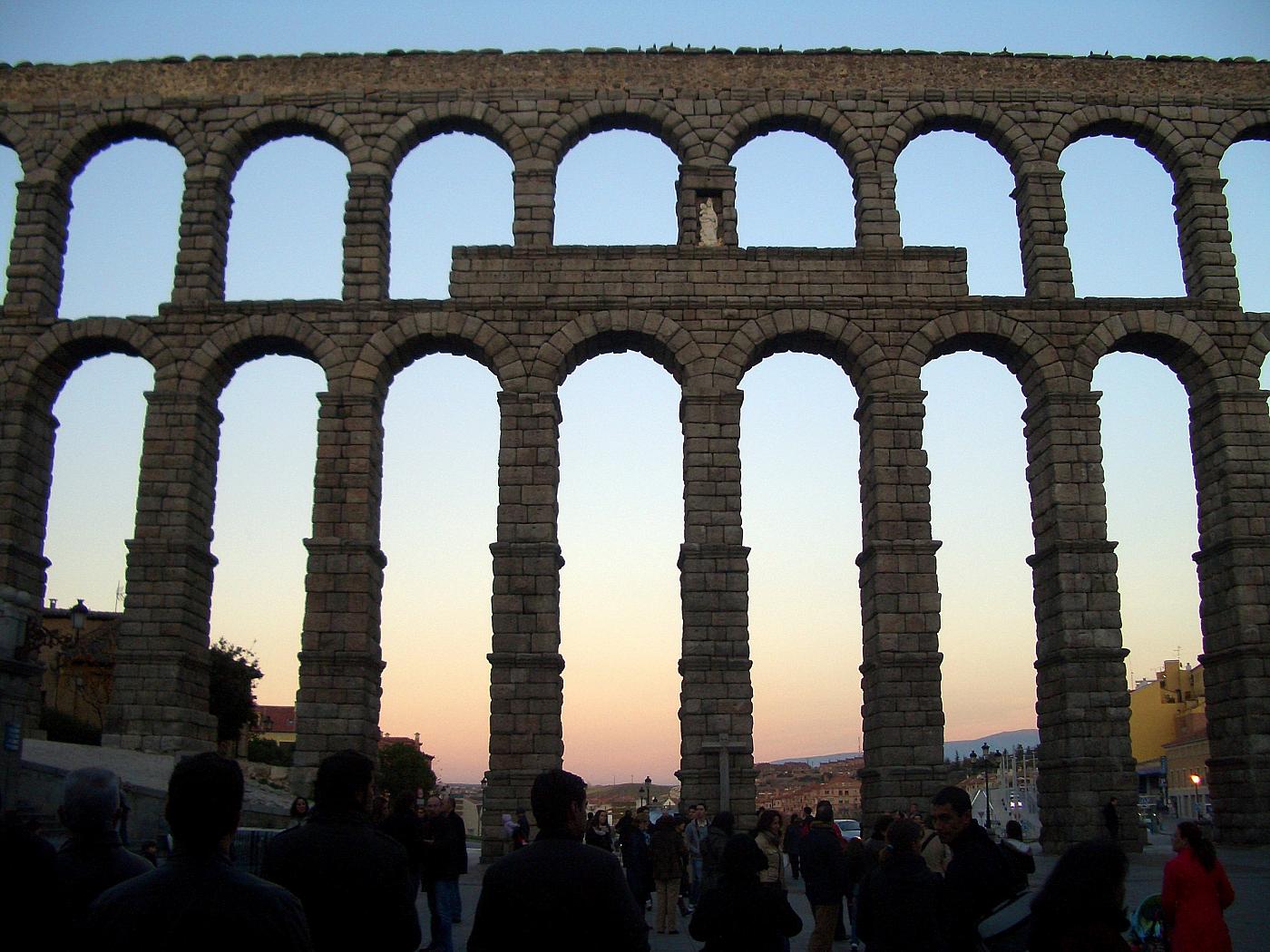
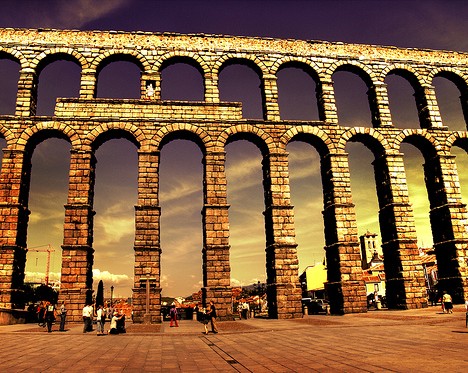
aqueducts were a means to transport water from one place to another, achieving a regular and controlled water supply to a place which would not otherwise have received sufficient water to meet basic needs such as irrigation of food crops and drinking fountains. They may take the form of underground tunnels, networks of surface channels and canals, covered clay pipes or monumental bridges.



Dome, in architecture, hemispherical structure evolved from the arch, usually forming a ceiling or roof. Domes first appeared as solid mounds and in techniques adaptable only to the smallest buildings, such as round huts and tombs in the ancient Middle East, India, and the Mediterranean. The Romans introduced the large-scale masonry hemisphere. The dome exerts thrusts all around its perimeter, and the earliest monumental examples, such as the Roman Pantheon, required heavy supporting walls.


Walang komento:
Mag-post ng isang Komento